

Case Studies · Kuala Lumpur & Selangor
Field Reports.
Dispatches from real Cleanaholics inspections and remediations across Kuala Lumpur and Selangor, reported the way a newsroom would: what happened, what the instruments found, and what it means for the next home. Neighbourhoods are real. Names are changed. Every number is as recorded.
50Properties inspected since 2025
4.6 / 5Google rating, 100+ public reviews
UKMLaboratory DNA identification
13Point inspection, DOSH ICOP IAQ 2010
Latest from the field
Real incidents. Real readings.
Newest first. Each headline opens the full report. New dispatches are filed as inspections are completed.
September 2026
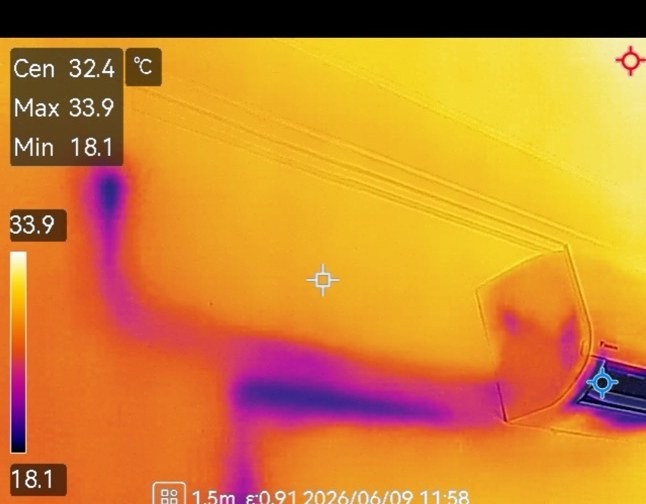 Section 9 Shah Alam · 28 Sep 2026 · Inspection In Section 9, Shah Alam, a house had been renovated twice. Behind the living-room air-conditioner the wall read 18 degrees against 33.
Thirty years old, refreshed twice, never replumbed. The thermal camera found a fourteen-degree cold trail behind the living-room air-conditioner in the first hour, the daughter's cornice was black to the naked eye, and the roof-void hatch glowed edge to edge under the lamp. Then the report listed everything it refused to claim.
- Section 16 Petaling Jaya · 28 Sep 2026 · Inspection A Section 16 bungalow passed its inspection. The report said so, then pointed at three rooms and one wall under the stairs.
Most homes are not in crisis, and this one was not. Ventilation fine, structure sound, air largely within range. What the instruments added was precision: one wall reading 999 in the children's play area, three ground-floor rooms with a musty note, and a formaldehyde sensor that deserved a window opened.
- Bandar Sungai Buaya · 28 Sep 2026 · Inspection In Bandar Sungai Buaya, the humidity was normal, the air was stale, and three walls read 999 behind two-year-old paint.
The family could smell mould and see none. The walls were clean and freshly renovated. A moisture meter pinned at its maximum on three of them, a timber wall read more than double its safe limit, and the carbon dioxide explained why the smell never cleared.
- Bangsar · 28 Sep 2026 · Inspection A Bangsar house stood empty for eighteen months. The inspector's first advice was not to move back in.
No air-conditioning, no open windows, no one home for a year and a half. When the owner returned, black mould had crossed every tiled floor and the bathroom had turned yellow. Why the report called it a programme rather than a clean, and why the first instruction was about the front door.
- Bangsar · 28 Sep 2026 · Inspection A Bangsar holiday home sat shut for months. The air tested nearly normal. The mattress glowed edge to edge.
The owner came back to a musty smell and visible mould, and the design studio handling the repaint asked for an assessment before the first coat went on. Twelve air readings sat within limits. Under the lamp, the bed, the bathroom, the air-conditioning and the insides of the cabinets told the story of the months nobody was there.
- Sutera Spring · 28 Sep 2026 · Inspection In Sutera Spring, a mother asked whether the mould was causing her daughter's constipation. The report said no, and showed its sources.
A fifteen-year-old semi-detached home with mould across the living hall and bedrooms, a daughter working from home in one of them, and a parent's specific health worry. The instruments found the mould in the gypsum and the humidity feeding it. The literature review found no evidence for the symptom she feared, and the inspector wrote that down.
- Bandar Sri Damansara · 28 Sep 2026 · Inspection A ground-floor flat in Bandar Sri Damansara had one room that never felt right. The air-conditioner on its wall was seeding it.
Nine storeys of other people's plumbing above, sixty-two per cent humidity, and three rooms with three different stories. The master bedroom had a formaldehyde source. The small bedroom had five times the volatile compounds of the rest of the flat and no chemical cause. Under the lamp, a halo around the air-conditioner and a pillow soaked through told the inspector why.
- Kampung Pandan · 28 Sep 2026 · Inspection The Kampung Pandan house that smelt of one musty room. Behind the feather wallpaper, the wall read 999, and it became a Wellness Home.
A newly renovated subsale bungalow, empty and waiting for the family. One room smelt musty, and an earlier half-day treatment had not fixed it. The inspection found clean air and wet walls, black mould behind the feature wallpaper, and the beginning of the most documented remediation in this library.
- Sri Hartamas · 28 Sep 2026 · Inspection A construction firm called an inspector to its own Sri Hartamas office. The walls read 979, and the report came with a note about building.
The staff had stopped noticing the smell. Under the lamp the gypsum partitions, the carpet and the chairs were all carrying it; one water-damaged wall read 979 against a dry wall at 146. Then the inspector wrote the builders a page about why mould comes back in new buildings, and how to design it out.
- Jalan Puchong · 28 Sep 2026 · Inspection On the forty-second floor off Jalan Puchong, a father asked whether the mould was the neighbour's fault. Sixteen thermal frames said no.
Two young children, two feature walls that kept growing mould, and one question: is this my home, my neighbour or the building? The thermal camera found no leak anywhere. The answer was seventy per cent humidity, stale air and an exterior wall that bakes every afternoon, and it was the better answer.
- Damansara Utama · 28 Sep 2026 · Inspection A tenant in Damansara Utama sent a photo of one mouldy toilet wall. The report told her which parts were hers to fix.
The toilet wall was five per cent of it. The living-room wall she shares with her son's bedroom was fully colonised, the store room was worse, and the moisture meter read Wet inside the plaster. Then the report drew a line between what a renter can do today and what the owner of the walls must.
- Kota Damansara · 28 Sep 2026 · Inspection A renovated subsale flat in Kota Damansara came with a history nobody mentioned. It was in the ceiling and inside the cabinets.
A musty smell, a ceiling that never looked dry, and a thousand square feet of freshly fitted melamine. The lamp found mould in nearly every room and inside the kitchen cabinets beside the glassware; the thermal camera and the moisture meter found the water arriving from the unit upstairs. Two problems, two owners.
- Kenny Hills · 28 Sep 2026 · Inspection The owners were abroad for three weeks. A blocked balcony drain filled their Kenny Hills apartment, and every wall read 999.
Water came over the balcony threshold during a storm and had twenty-one days alone with the bamboo floors and plaster walls. The inspection that followed was written for a loss adjuster who would never visit: the tide lines, the thermal bands, and a moisture meter pinned at its maximum at every point.
- Bandar Baru Bangi · 28 Sep 2026 · Inspection She booked an inspection for one mouldy wall in the nursery. The report came back about the whole 8,000 square feet.
Black mould on the wall of a room about to become a nursery. A structured colony above a light switch in the parents' bedroom that nobody had seen. And twenty-year-old wallpaper across a Bandar Baru Bangi bungalow that had quietly turned from a finish into a moisture trap. The report gave two honest answers and refused to blur them.
- Subang Bestari · 28 Sep 2026 · Inspection A Subang Bestari family lived under one leak and above another. Seven of eight dishes grew heavy mould in five days.
The smell met visitors at the door. The feature wall read 999 at four points. The thermal camera found the water arriving from the ceiling, and the neighbour downstairs had already complained. Eight settle plates then showed what the family of four was breathing.
- Subang Jaya · 28 Sep 2026 · Inspection Sewage came through a Subang Jaya home. The inspector treated it, then told the mother something harder.
She called about the sewage on the ground floor. The moisture meter still read Wet days after the mopping. Then the ultraviolet lamp found established mould across the ceilings and walls, and the report did something few contractors do: it declined to sell her the answer.
- Rawang · 28 Sep 2026 · Inspection In a twenty-year-old Rawang terrace, the walls were dry and the mould was everywhere. The air itself was the leak.
Four adults, a renovation three years old, and fungal growth the family could see. The moisture meter found no dampness in a single wall. The humidity monitor found the answer instead: 67 to 69 per cent, day in and day out, feeding growth on every ceiling the lamp touched.
- Chan Sow Lin · 28 Sep 2026 · Inspection A Chan Sow Lin apartment smelt of damp clothes for three weeks. Nothing was wet. The floor was the source.
No leak, no damp, healthy humidity and two air purifiers running. The inspector ruled out every usual suspect, then switched off the lights. Under ultraviolet, the tiled floor fluoresced in circular blooms from the grout lines out.
- Mont Kiara · 28 Sep 2026 · Inspection A Mont Kiara couple expecting their first baby asked why the hallway smelt musty. The shoe rack answered.
Under the lamp, the mould was on the walls, the ceilings, the curtains and the floor. Beside the balcony the wall read 999. And the source of the smell that greeted every visitor was a piece of joinery by the front door.
- Sri Hartamas · 28 Sep 2026 · Inspection Before the sledgehammer: a Sri Hartamas apartment about to be gutted had walls reading 999.
The air was clean. Every airborne reading passed. But the new owner asked for the building to be examined before demolition, and the moisture meter, the thermal camera and the ultraviolet lamp found a very different apartment behind the paint.
- Taman Yarl · 28 Sep 2026 · Inspection A Taman Yarl flat flooded while the family was abroad. Six open dishes showed what they would have breathed.
Water crossed the living room, the corridor and both balconies. The instruments mapped where it went. Then the inspector opened six culture plates, left them for five days, and gave the occupants, the owner, the building and the insurer a picture of the air itself.
- Taman Wahyu · 28 Sep 2026 · Inspection A brand-new Taman Wahyu condo read eleven times the formaldehyde limit in the kitchen. The lamp found a bigger problem.
The owner booked an inspection because she had read about formaldehyde in new cabinets. The kitchen cupboards confirmed her fear. Then the ultraviolet lamp went inside the bedroom wardrobes and up through the toilet ceiling, and the inspector told her which problem actually mattered.
- Bukit Robson · 27 Sep 2026 · Inspection A Bukit Robson kitchen was scraped and repainted. A month later the slab still read 999.
The leak from upstairs had been stopped and the mould painted over. The tenants could still smell it. Two hours with a moisture meter, a thermal camera and an ultraviolet lamp showed why a finished-looking repair had not reached the problem.
The technical records
Every reading, published.
Behind the reports sit the full technical records: the brief, every reading, the ultraviolet and thermal evidence, the verdict. Filter by problem or property.

Project Record · Kuala Lumpur · 2026
A house that looked finished, and was not.
Ninety days, eleven hold-point stages, eighteen fungal isolates recovered by Universiti Kebangsaan Malaysia and two named to the species by DNA. A family home remediated and rebuilt before a single box was moved in.
Open the record →
Inspection Record 01 · Kuala Lumpur · Sep 2026
The leak was fixed. The smell stayed.
A thirty-year-old condominium, repainted a month earlier and still musty. The slab read 999 on the moisture meter behind a clean panel, and the ultraviolet lamp explained the rest.
Open the record →No published record matches that filter yet. New records are added every week.
Being written up next
- A 5,000 sq ft bungalow with young children, six plates heavy, Shah Alam Aug 2026
- New dispatches are filed as each inspection is completed Ongoing
In their own words
What clients wrote on Google.
Every review below is a screenshot of the public review on our Google Business Profile, unedited. Each one links to the original so you can verify it on Google yourself.


Screenshots captured on 27 September 2026 from the public Google Maps listing of Cleanaholics Sdn Bhd. Reviewer names and photographs are as published by the reviewers themselves on Google. Google and Google Maps are trademarks of Google LLC; Cleanaholics is not affiliated with Google.
The next record could be yours.
The same 13-point Hygiene & Mould Inspection, the same instruments, the same written report, for homes and offices across Kuala Lumpur and Selangor.
On privacy. In every record the client’s name has been changed and the building, unit and street withheld. Readings, photographs, findings and recommendations are from the actual inspection or project, unaltered. All observations are indicative, taken at a single point in time, and are not medical advice or a legal determination.
- Choosing a selection results in a full page refresh.