Skip to content

By private appointment Kuala Lumpur & Selangor

Wellness Home™

A home engineered
to stay healthy.

Climate, materials and air designed as one system, then measured.

Enter Wellness Home

Evidence

Nothing here is
taken on trust.

Inspection records, laboratory results and the standards we measure against.

Open the case studies

Journal

Writing from
the field.

What we find inside Malaysian homes and buildings, and what the science says about it.

Read the Journal

Letters

The House

The Doctor for
Houses & Buildings.

An AI driven hygiene science and research company, based in Puchong, Selangor.

About Cleanaholics
Call

Hygiene Science Maison Kuala Lumpur & Selangor

The Doctor for Houses & Buildings

Cleanaholics diagnoses and remediates mould (mold), formaldehyde and biohazard contamination in homes and buildings across Kuala Lumpur and Selangor. Every engagement starts with measurement on site and closes with independent laboratory verification.

Cleanaholics hygiene inspector in a respirator taking surface samples at the base of a mould-affected wall
Bedroom treatment in full protective suit, Cleanaholics field film
Ceiling void inspection, Cleanaholics field film
Cabinetry treatment, Cleanaholics field film

Field film, recorded on site

  1. 01 / 04Surface sampling at the wall base
  2. 02 / 04Bedroom treatment in full protective suit
  3. 03 / 04Ceiling void inspection
  4. 04 / 04Cabinetry treatment

01PhilosophyDiagnosis before treatment

Wealth buys the address.It does not buy clean air.

Cleanaholics is a hygiene science maison, diagnosing and remediating mould, formaldehyde and biohazard contamination for the principal residences and curated portfolios of the Klang Valley. We identify the exact fungal species through independent laboratory DNA sequencing, the only such service in Malaysia, and remediate to international standards aligned with DOSH ICOP IAQ 2010.

  • IdentificationFungal DNAThe exact species, sequenced by an independent laboratory.
  • ReferenceICOP IAQ 2010Malaysia's code of practice on indoor air quality, issued by DOSH.
  • ProofLaboratory swabsTaken after remediation, before an engagement is closed.

02Where to beginFour ways in

Start with what you are noticing.

Most people arrive with one of four concerns. Each leads to the same first step: a measured inspection, delivered in writing.

03MethodFive stages, each documented

How professional mould remediation works.

The aim is not only to remove visible mould but to correct the moisture source so it does not return. Each stage is documented so the result is verifiable.

  1. 01

    Inspection and moisture mapping

    A hygiene inspector locates active growth and the moisture source using thermal imaging and moisture metering.

  2. 02

    Containment

    The affected area is sealed to stop spores spreading to clean rooms during works.

  3. 03

    HEPA extraction

    HEPA-filtered vacuums and air scrubbing capture airborne spores.

  4. 04

    Removal and treatment

    Contaminated material is removed and surfaces receive anti-microbial and nano-coating treatment.

  5. 05

    Verification

    A final check confirms the mould is gone and the moisture source is corrected so it does not return.

Mould remediation in fullInspection methodology

The Cleanaholics principle

Why renovate when you can remediate?

One renews what you can see. The other understands what sits underneath.

Renovation is one step. Remediation is the discipline

05EvidencePublished records

Most contamination is invisible.

10 to 50%

The share of indoor environments affected by dampness in Europe, North America, Australia, India and Japan, as estimated in the World Health Organization's Guidelines for Indoor Air Quality: Dampness and Mould, with conditions more severe in settings such as river valleys and coastal areas. The fact that you cannot see or smell it does not mean it is absent, only that it has not yet been diagnosed.

Inspection Record 01Kuala LumpurSeptember 2026

The leak was fixed. The smell stayed.

A condominium in Kuala Lumpur, thirty years old, with a leak from the unit above that had been stopped and a kitchen that had been scraped, patched and repainted a month earlier. The musty odour never left. In two hours on site, the instruments explained why.

On site, room by room
2hrs
Rooms air-tested
4
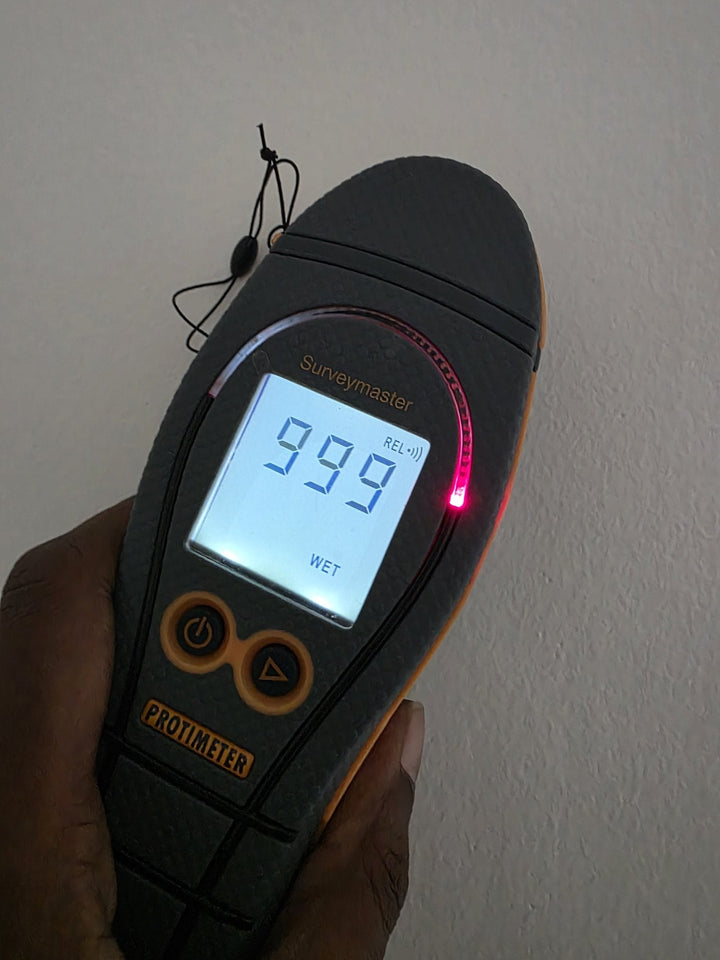
Wettest slab reading (0 to 1000)
~1000
Instruments used
5

Thermal imaging

Exposed pipework at the common toilet, in normal light Thermal image of the same pipework, an even 27.5 to 30.9 degree band with no cold wet zone

Drag across the image. The thermal camera shows an even 27.5 to 30.9 °C band with no cold wet zone. Thermal imaging found no active leak, so this is retained moisture rather than a running one.

Moisture in the slab

  1. Wettest point~1000
  2. Along the slab800
  3. 600
  4. 460
  5. Tapering354
  6. 287
  7. 239
  8. 220
  9. Dry boundary166

0Wet above 2001000

Protimeter readings on a 0 to 1000 scale: Dry to 100, At Risk to 200, Wet above 200. Values near 1000 mean the concrete is still carrying significant moisture roughly a month after the surface repair. The slab has not dried.

The air, measured room by room

RoomTemp °CRH %CO₂ ppmPM2.5 µg/m³PM10 µg/m³HCHO mg/m³TVOC mg/m³
Kitchen3163114549710.0400.06
Living room2867100846650.0150.29
Master bedroom306299350740.0450.05
Office / study275490644610.0130.06

Indicative readings taken with the unit closed, as found. PM2.5 and PM10 in µg/m³; formaldehyde (HCHO) and TVOC in mg/m³. Marked carbon dioxide above 1,000 ppm, which the DOSH code treats as a sign of inadequate ventilation; the record puts it down to a closed, sealed unit at the time of inspection.

  • Humidity on the high side. Relative humidity sits in the low-to-mid 60s in the kitchen, living room and master bedroom, a condition that favours mould.
  • Carbon dioxide, mildly elevated. Roughly 900 to 1150 ppm, highest in the kitchen. Gentle ventilation resolves this.
  • Dust particulates, raised. PM2.5 and PM10 read above guideline in every room, highest in the kitchen and master bedroom.
  • Formaldehyde and TVOC, low. Both within comfortable levels throughout. No chemical air-quality concern.
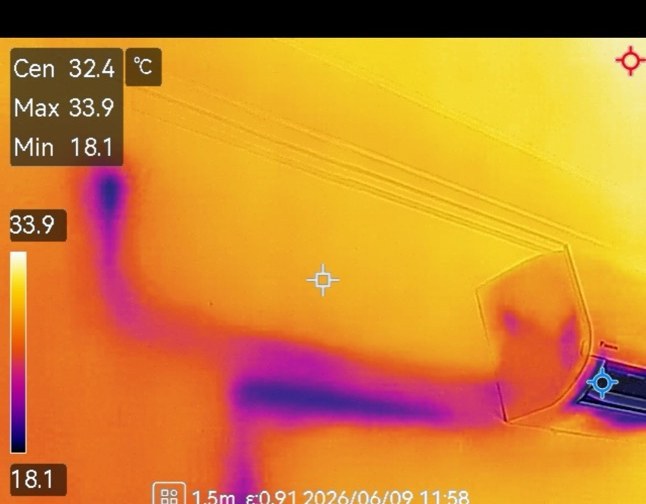
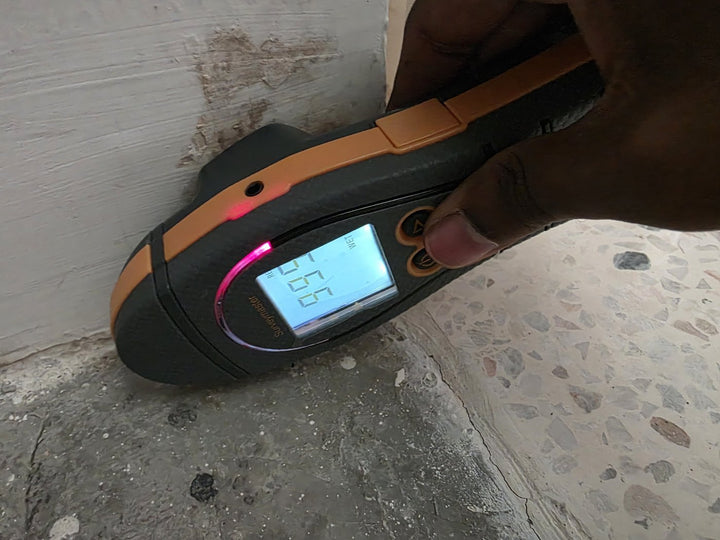
Instruments: HIKMICRO thermal camera, Protimeter, 365 nm UV, 7-in-1 air monitor.

Read the full record

06VerificationSavoir-faire

Remediation is not complete until it is verified.

Every engagement closes with independent post-remediation laboratory swabs, confirming species levels below regulatory thresholds. It is the only standard of proof that separates a maison from a vendor.

  • Three labelled swab tubes taken from a master bedroom wallWall swabs, labelled by location
  • Culture plates laid out on a kitchen counter and reviewed with the homeownerPlates read with the homeowner
  • Settle plate marked with the room, date and time of samplingEach plate dated and timed
On site, sampled with the homeowner present.

07The standardDOSH ICOP IAQ 2010

The limits we measure against.

Malaysia's Industry Code of Practice on Indoor Air Quality 2010, issued by the Department of Occupational Safety and Health (DOSH), sets an acceptable range for the air inside a building. These are its figures, as printed in Tables 1 and 2 of the code.

Indoor air quality assessments by Cleanaholics are aligned with this code, so findings are measured against a recognised standard rather than opinion.

Read the code (PDF)DOSH IAQ questions, 2025

Table 1 of the code. Acceptable range for specific physical parameters.
Physical parameterAcceptable range
Air temperature23 to 26°C
Relative humidity40 to 70%
Air movement0.15 to 0.50m/s
Table 2 of the code. Limits are eight-hour time-weighted averages. The carbon dioxide figure is a ceiling limit, not to be exceeded at any time; readings above it indicate inadequate ventilation. An excess of bacterial or fungal counts does not necessarily imply a health risk but serves as an indicator for further investigation.
Indoor air contaminantAcceptable limit
Carbon dioxide ceiling, ventilation indicator1,000ppm
Carbon monoxide10ppm
Formaldehyde0.1ppm
Ozone0.05ppm
Respirable particulates0.15mg/m³
Total volatile organic compounds (TVOC)3ppm
Total bacterial counts500cfu/m³
Total fungal counts1,000cfu/m³

New, at home

Know what grows in your home.

A home mould screening kit you watch grow, read by our hygiene team. From RM988.

Discover MouldSnap

08RecognitionCertification and press

The healthy-handover standard

The seal is the standard.

Our certification stamp is issued only when a property is verified clean to the DOSH ICOP IAQ 2010 framework. The mark is the proof.

Institute of Hygiene Science, IHS Certified Firm seal Institute of Hygiene ScienceCheck the firm and its inspectors on the public register

The long view

A home is not restored for today.You are investing for the next generation.

The finest residences are cared for once, properly, at the beginning. What that protects is not this year. It is everyone who lives here after.

09QuestionsAnswered by the inspection team

Mould, formaldehyde and air quality, answered plainly.

Answers reviewed by Mr. Vin, Senior Hygiene Inspector.

All questions and answers

How can I tell if my Malaysian home has a mould problem?

Common signs are black, green or white patches on walls, ceilings and grout, a persistent musty smell, peeling paint, and allergy or asthma symptoms that worsen indoors. Malaysia's humid tropical climate keeps indoor humidity high, which lets mould (mold) grow on gypsum ceilings, wardrobes and behind furniture. A professional inspection with moisture metering, and laboratory testing where needed, confirms whether the growth is active and which species are present.

Is black mould dangerous to health?

Black mould can release spores and, in some species, mycotoxins that are linked to respiratory irritation, allergic reactions and aggravated asthma, with children, the elderly and immune-compromised people most at risk. The World Health Organization's Guidelines for Indoor Air Quality identify indoor dampness and mould as a genuine public health concern. Cleanaholics identifies the exact species through fungal DNA testing rather than guessing from colour alone.

How does professional mould remediation work?

Remediation follows a controlled sequence: inspection and moisture mapping, containment of the affected area, HEPA-filtered extraction of spores, physical removal of contaminated material, anti-microbial and nano-coating treatment, then a final verification check. The aim is not only to remove visible mould but to correct the moisture source so it does not return. Each stage is documented so the result is verifiable.

Why does mould keep coming back in Malaysian homes?

Recurring mould is almost always a moisture problem, not just a cleaning problem: condensation from air-conditioning, roof or plumbing leaks, poor ventilation and high indoor humidity. Wiping the surface removes the stain but leaves the root cause, so growth returns within weeks. Lasting results require fixing the moisture source and, where appropriate, applying a protective anti-mould coating.

How much does mould removal cost in Malaysia?

Cost depends on the size of the affected area, the material involved and the underlying moisture cause, so Cleanaholics scopes every remediation from a hygiene inspection rather than quoting a flat figure sight unseen. The inspection measures the real extent of the problem and produces a documented plan, so you pay for the actual work required rather than a generic package.

What is formaldehyde and why should it be removed after renovation?

Formaldehyde is a volatile organic compound released by new plywood, laminates, adhesives and furniture, and it can cause eye, nose and throat irritation, headaches and longer-term respiratory concerns. Levels are highest in the months after a renovation, and Malaysia's warm indoor conditions increase off-gassing. Professional VOC treatment uses catalytic and nano-coating methods to break formaldehyde down rather than masking the smell.

What is fungal DNA testing and why does it matter?

Fungal DNA testing identifies the exact mould species present by sequencing genetic material from a sample, instead of estimating from colour or appearance. This matters because different species carry different health risks and need different treatment, and some toxic moulds look harmless. Cleanaholics is the only company in Malaysia offering both fungal DNA testing and mycotoxin analysis.

Does Cleanaholics follow any Malaysian indoor air quality standard?

Yes. Indoor air quality assessments are aligned with Malaysia's DOSH Industry Code of Practice on Indoor Air Quality 2010 (ICOP IAQ 2010), the national reference for indoor environments, and Cleanaholics is certified through the Institute of Hygiene Science. Findings are measured against a recognised standard rather than opinion.

10By consultationKuala Lumpur and Selangor

An engagement, arranged privately.

Every project
Begins with an on-site hygiene diagnostic, delivered in writing.
Confidentiality
Absolute. Commercial and private work is conducted under NDA.
Availability
Open 24 hours, 365 days a year. We reply faster than any firm in our field.
Capacity
Limited annual capacity, by private appointment across Kuala Lumpur and Selangor.
The Community

On Instagram

@cleanaholicsmy
144,000and growing